Computational Materials Science · AI for Discovery

Weiyi Xia

Scientist I at Ames National Laboratory developing AI/ML-assisted, first-principles, and exascale workflows to discover and understand functional materials.

My work bridges predictive computation and experimental validation across magnetic materials, rare-earth and rare-earth-free compounds, intermetallics, ML interatomic potentials, and GW/BSE methodology.
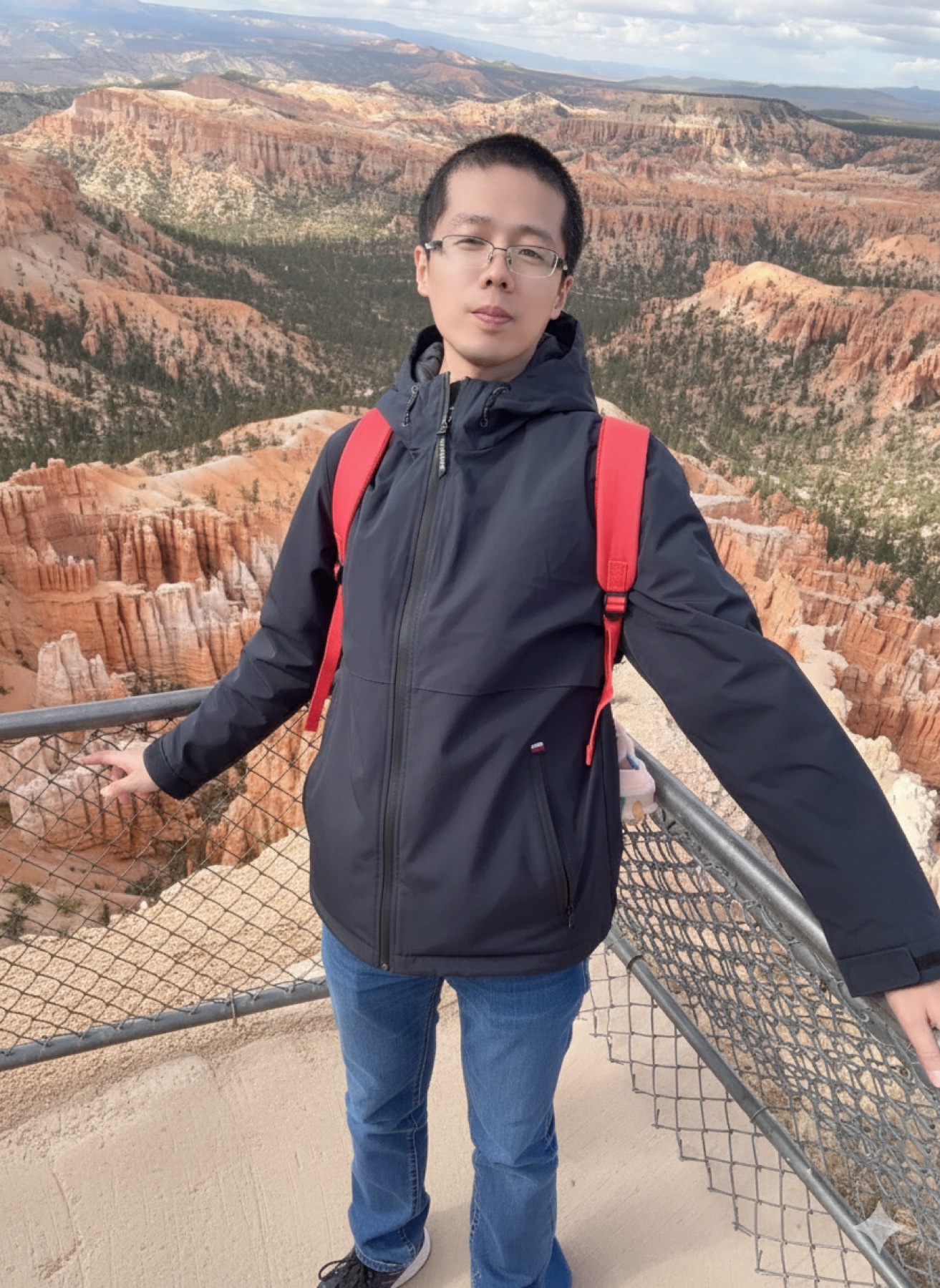
Weiyi Xia standing in front of a canyon landscape
40+ publications across first-principles methods and AI-guided discovery
3 public materials data resources for magnetic, ML, and rare-earth systems
2025 Ames National Laboratory Inventor Incentive Award
Ph.D. Condensed Matter Physics, University at Buffalo

Research Direction

AI-guided materials discovery with quantum-mechanical grounding.

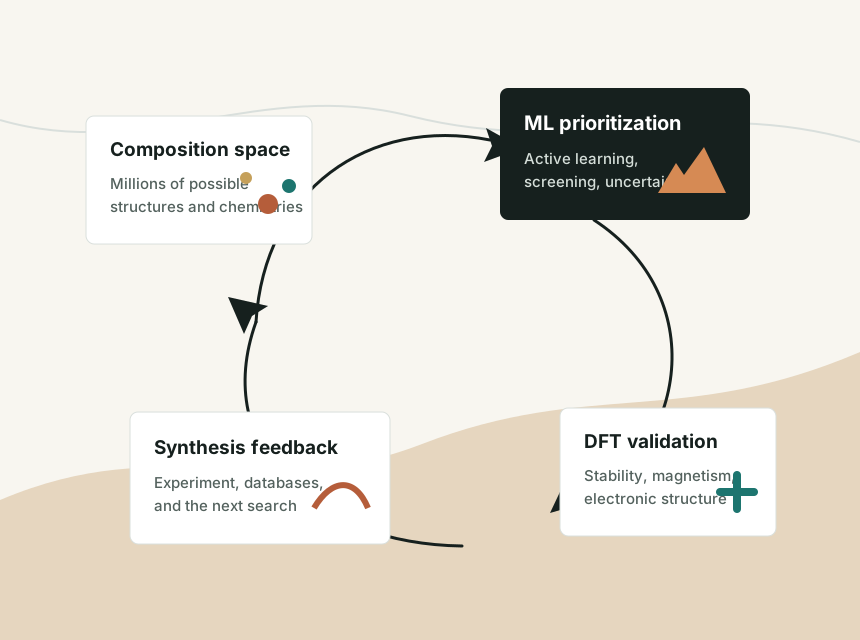
I develop computational strategies that reduce the distance between a promising composition and a materials claim that can be checked, reproduced, and eventually synthesized. The common thread is a closed loop: generate candidates, learn from first-principles calculations, interrogate physical mechanisms, and feed the result back into the next search.

01

AI/ML-Accelerated Discovery

Adaptive feedback, deep-learning screening, and scalable workflows for exploring large composition and structure spaces.

02

Magnetic Materials

Rare-earth-free magnets, Fe-Co-X compounds, magnetic anisotropy, spin-state physics, and noncollinear magnetic order.

03

Interatomic Potentials

Machine-learning potentials for phase stability, forces, energies, and synthesis or growth kinetics in complex materials.

04

Electronic Structure Methods

Large-scale GW/BSE methodology and quasiparticle/optical-property calculations for low-dimensional and bulk materials.

Scientific Highlights
Representative arcs from prediction to mechanism.

Diagram of an AI and DFT closed-loop materials discovery workflow

PNAS · npj Comput. Mater. · JMCA · PRM

Closed-loop discovery workflows

Integrated ML screening, adaptive feedback, DFT validation, and high-performance workflows for accelerated materials design.

Original rendering of AI-guided adaptive feedback, DFT validation, and experimental checks for Fe-Co-B magnetic materials

PNAS · Fe-Co-B

Prediction-to-validation discovery

An adaptive loop connecting candidate generation, ML prioritization, first-principles checks, and experimental validation.

Original rendering of machine-learning-guided La-Co-Pb discovery across an immiscible ternary composition space

npj Comput. Mater. · La-Co-Pb

Immiscible-element structure search

Machine learning turns an antagonistic chemical space into a navigable map of low-energy crystal motifs.

Selected Publications

A publication record spanning methods, magnets, and materials discovery.

The selected work below emphasizes papers that anchor the current research program: AI-assisted discovery, magnetic materials, exascale workflows, intermetallic compounds, and large-scale electronic-structure methodology.

  1. 2026 AI-driven and quantum-informed searches for rare-earth-free magnets: Applications to Fe-Co-X (X = B, C, P, Si, S) compounds. J. Magn. Magn. Mater.
  2. 2026 Accelerated discovery and design of Fe-Co-Zr magnets with tunable magnetic anisotropy through machine learning and parallel computing. Phys. Rev. Mater.
  3. 2025 Machine-learning and first-principles investigation of lightweight medium-entropy alloys for hydrogen-storage applications. Int. J. Hydrogen Energy
  4. 2025 Synthesis challenges, thermodynamic stability, and growth kinetics of La-Si-P ternary compounds. J. Mater. Chem. A
  5. 2025 Machine learning accelerated prediction of Ce-based ternary compounds involving antagonistic pairs. Phys. Rev. Mater.
  6. 2025 Manipulating ambient pressure superconductivity in metal borocarbides through hole doping. J. Phys.: Condens. Matter
  7. 2024 Machine learning assisted search for Fe-Co-C ternary compounds with high magnetic anisotropy. APL Machine Learning
  8. 2024 Giant magnetic anisotropy of Pb atoms in 3d-based magnets. Phys. Rev. B
  9. 2023 Accelerating materials discovery using integrated deep machine learning approaches. J. Mater. Chem. A
  10. 2023 Machine learning guided discovery of ternary compounds involving La and immiscible Co and Pb elements. npj Comput. Mater.
  11. 2022 Accelerating the discovery of novel magnetic materials using machine learning-guided adaptive feedback. PNAS
  12. 2022 Predicting magnetic anisotropy energies using site-specific spin-orbit coupling energies and machine learning: Application to iron-cobalt nitrides. Phys. Rev. Mater.
  13. 2020 Combined subsampling and analytical integration for efficient large-scale GW calculations for 2D systems. npj Comput. Mater.
  14. 2019 Prediction of MXene based 2D tunable band gap semiconductors: GW quasiparticle calculations. Nanoscale

Current Scientific Directions

Materials questions now shaping the next papers and proposals.

Exascale AI for materials discovery

Scalable workflows that combine AI/ML models, DFT validation, phase-diagram construction, and community-ready software.

Critical-element-conscious magnets

Rare-earth-free and critical-element-reduced magnetic materials with attention to anisotropy, stability, and manufacturability.

Synthesis-aware predictions

Free-energy, kinetics, and experimental refinement as first-class constraints in the design of new intermetallic compounds.

Magnetic ground-state complexity

Collinear, noncollinear, and spin-spiral calculations for systems where magnetic frustration changes the materials story.

Open Resources

Databases and reusable research infrastructure.

Trajectory

From electronic-structure methods to AI-assisted discovery.

2025 - Present

Scientist I, Ames National Laboratory

AI/ML-assisted discovery, exascale workflows, magnetic materials, and synthesis-aware computational design.

2020 - 2025

Postdoctoral Research Associate, Ames National Laboratory and Iowa State University

Adaptive genetic algorithms, ML-guided materials discovery, magnetic systems, and experimental collaborations.

2020

Ph.D. in Condensed Matter Physics, University at Buffalo

Large-scale GW quasiparticle calculations for 3D and 2D materials: methodology development and applications.

Contact

For collaborations in AI for materials, magnetic systems, and first-principles discovery.